
"best coffee climates"
10000 article(s) found

A brief introduction to the planting situation of Coffee Cliff Manor in Jamaica with three varieties classified, Climate and altitude
(Jamaica Prime Coffee Beans). Coffee is grown outside the Blue Mountains and is called Jamaican coffee. It turns out that people in the coffee industry in China generally have a wrong understanding that only coffee grown in the Blue Mountain area above 1800 meters above sea level can be called Blue Mountain Coffee. In fact, there is only one manor on the top of the Blue Mountain Mountains above 1800, that is, Amber, which is Chinese.

Geographical location of Duncan Manor in Panama
Professional barista exchange please follow the coffee workshop (Wechat official account cafe_style) introduction: Panama's Baru volcano has a unique micro-climate and volcanic topography, is the highest mountain in Panama, the main peak 3474 meters (11398 feet) above sea level, is the highest peak in Panama. The volcano stretches about 35 kilometers along the border with Costa Rica. Born here

A brief introduction to the cultivation of Mexican boutique coffee beans with special taste, geographical location, climate and altitude
Aldura coffee beans are the top coffee beans in Mexico. This kind of coffee beans have large granules, with strong sweet, sour and good aroma. About 5 times of Mexico's national area are plateaus and mountains, with an annual average temperature of 2527 ℃. The Mexican plateau has a mild climate all the year round, with mostly plateau topography, no cold winter, no hot summer, and evergreen trees all the year round.

How do Hawaiian kona Coffee drink Hawaiian Kona Coffee producing area Grade cutting and Environmental Flavor characteristics
Professional coffee knowledge exchange more information on coffee beans Please pay attention to the coffee workshop (Wechat official account cafe_style) Kona coffee beans produced in Hawaii have the perfect appearance its fruit is unusually full and shiny. The taste of coffee is rich and aromatic, with cinnamon flavor, and the acidity is well balanced. The best Kona coffee is divided into three grades: very good.

A brief introduction to the planting situation of boutique coffee beans in Happy Manor with strong aroma, geography, climate and altitude
In many countries, coffee production will be seriously affected for political reasons. Nicaraguan coffee industry is no exception. The 1979 revolution forced coffee planters to flee to Miami. A period of indecision followed, when the government considered whether to redistribute land (including many plantations), which led to a shortage of coffee and a decline in production since the early 1970s

Nicaragua's poorest coffee plantation in Central America Joy coffee plantation Climate altitude profile
Nicaragua is located in central Central America, bordered by the Pacific Ocean to the west and the Caribbean Sea to the east. North central highlands, coastal plains to the east, is part of the Central American volcanic belt. The eastern plain is hot and rainy, and has a tropical marine climate. Suitable climate provides a good growing environment for coffee cultivation. High quality Nicaragua coffee, grown in the north and centre of the country. Coffee is black.

A brief introduction to the cultivation of boutique coffee beans in Happy Manor with mediocre and gentle flavor, geographical location, climate and altitude.
Nicaragua is now one of the poorest countries in Central America. Due to its poor economic foundation, the coffee industry is still relatively backward, while coffee farmers are in extreme poverty. Fortunately, Nicaraguan coffee has received some foreign aid funds to improve the quality of its coffee. Coffee from Madagelba, Sinodega and Segovia in Nicaragua

A brief introduction to the planting situation, geographical location, climate and altitude of fragrant blue mountain boutique coffee beans
The same coffee tree species, whether planted in Hawaii, Kenya, Papua New Guinea or anywhere else with a similar climate, cannot produce the flavor of blue mountain coffee beans. Pure Jamaican Blue Mountain Coffee perfectly combines the unique sour, bitter, sweet, mellow and other flavors of coffee to form a strong and attractive elegant flavor, which is unmatched by other coffee. Love Blue Mountain Coffee

What's wrong with Cuban coffee? will the flavor of Cuban Crystal Mountain coffee be crystal clear?
Professional coffee knowledge exchange more coffee bean information please follow the coffee workshop (Wechat official account cafe_style) front street-Cuba Crystal Mountain Coffee introduction most parts of Cuba have a tropical rain forest climate, only the southwest coastal leeward slope for the savanna climate, the average annual temperature is 25 ℃, except for a few areas, the annual precipitation is more than 1000 mm, which is related to the geography of the Jamaican Blue Mountains.

A brief introduction to the treatment method of grinding degree and baking degree of fine coffee beans in Valenford Manor with excellent flavor
The Blue Mountains, with an average elevation of 2100 meters, has fertile volcanic soil, fresh air, no pollution, humid climate, foggy and rainy all the year round (average precipitation of 1980 mm, temperature of about 27 degrees). The unique environment and climate have created the world-famous Blue Mountain Coffee, which has the characteristics of all the high-quality coffee in the world: not only the taste is rich and mellow, but also because the coffee is sweet and sour.

What does climate change mean for the future of coffee? the hope of coffee F1 hybrid cars
Stamaya. Central America. H1 . These are the names that those who take coffee seriously should know, because mixed varieties may be the coffee of the future. Although there are a large number of special coffee beans today-the familiar coffee includes Allah from Ethiopia, Colombia, Guatemala and other places.

Planting situation of Renas Manor Coffee Manor in El Salvador A brief introduction to the production of climate and altitude
In the early 1990s, guerrilla warfare greatly damaged the country's national economy, reducing coffee production from 3.5 million bags in the early 1970s to 2.5 million bags in 1990-1991. The eastern part of the country was most affected by guerrilla warfare, and many farmers and workers were forced to leave the manor. The shortage of funds has led to a sharp drop in coffee production, from 1200 kg per hectare in the past to today's yield per hectare
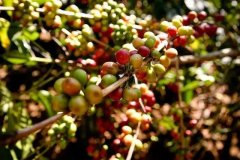
San Marco has the hottest climate among the eight major coffee producing areas in Guatemala.
Fine coffee is made from boutique coffee beans. If the beans that make coffee are not boutique coffee beans, the coffee liquid produced cannot be called fine coffee. Boutique coffee is fresh coffee. Whether it's food or drink, of course, the fresh the better, and so is boutique coffee. High-quality coffee should keep the beans fresh before making, including the preservation of roasted beans, and the coffee should be made before making.

A brief introduction to the treatment method of grinding degree and baking degree of bright sour Dominica boutique coffee beans
Dominica is an island country with a tropical climate, with little change in temperature throughout the year. Except for the lower temperature in the Central Cordillera Mountains, which can reach less than 0 ℃ in winter, the average annual temperature in other areas is between 25 and 30 ℃, while affected by the mountain topography, the north and east face the northeast trade wind, with an annual precipitation of 1500-2500 mm, which belongs to a tropical marine climate.

Coffee growing in Santo Domingo, Dominican Republic Location Climate Altitude Profile
In the early 18th century, coffee was introduced to Dominica from Martinique, and the northern regions, represented by Ciba, and the southern regions, including Ocayabani Santo Domingo, produced fine coffee. Among them, Santo Domingo and Bani produced coffee, almost synonymous with Domica coffee, is world-famous quality coffee. Santo Domingo coffee, characterized by fresh and elegant,

Guatemala coffee beans grind scale varieties taste treatment method manor introduction
Antigua coffee is sought after by most coffee lovers because of its distinctive aroma. Because it is planted on the belly of volcanoes, it can retain its own characteristics more than Costa Rica, mainly because it has more geographical and climatic advantages than Costa Rica. Guatemala is located in the tropics, but due to its high altitude, the atmosphere

Flavor Fresh Kenya Kam Chu Valley Fine Coffee Bean Planting Location Climate Elevation Profile
Some buyers, especially Japanese ones, have complained about Kenya's coffee system. Some traders say the quality of coffee in the country has declined, pointing out that buying directly from farmers may be one way to improve quality. But Kenya's detailed rules and procedures are a model for all coffee-producing countries

A brief introduction to the cultivation of Katim Blue Mountain Fine Coffee beans, Climate and altitude
Kartika/Bourbon hybridization, Kadika / bourbon mixture. Medium tall trees with slender leaves with red tips, coffee trees with the best shadows, usually big cherries. Producing areas: Aceh, Simalungun KOPI LUWAK civet coffee Kopi Luwak civets eat red coffee cherries, pulled out of the stool coffee beans, expensive. Typica: Essel

Slightly sour Cuba Crystal Mountain Fine Coffee Bean Cultivation Location Climate Elevation Profile
Cubita is praised and affirmed by food families from all over the world. It is known as the unique Caribbean coffee, the special coffee beans in the island coffee beans, and the crystal mountain coffee produced in Cuba's crystal mountain, so it is called Cuban crystal mountain coffee. Crystal Mountain Coffee is synonymous with top Cuban coffee because this area produces precious minerals such as quartz and crystal in addition to coffee. crystal

Introduction to the perfect sour coffee flavor description of Wallenford Manor in Jamaica
Everyone knows that Blue Mountain Coffee is the best coffee in the world. Do you know why it is so good? What's good about it? The answer is: Jamaica's weather, geological structure and topography together provide a unique ideal place. The average elevation of the Blue Mountains is 2100 meters above sea level, with fertile volcanic soil, fresh air, no pollution, humid climate, foggy and rainy all the year round (the average precipitation is 1980 millimeters).